Books Like Harry Potter and Fourth Wing: A Reader's Guide to The Daughter of the Dawnstar
Your Next Fantasy Series After Harry Potter and Fourth Wing
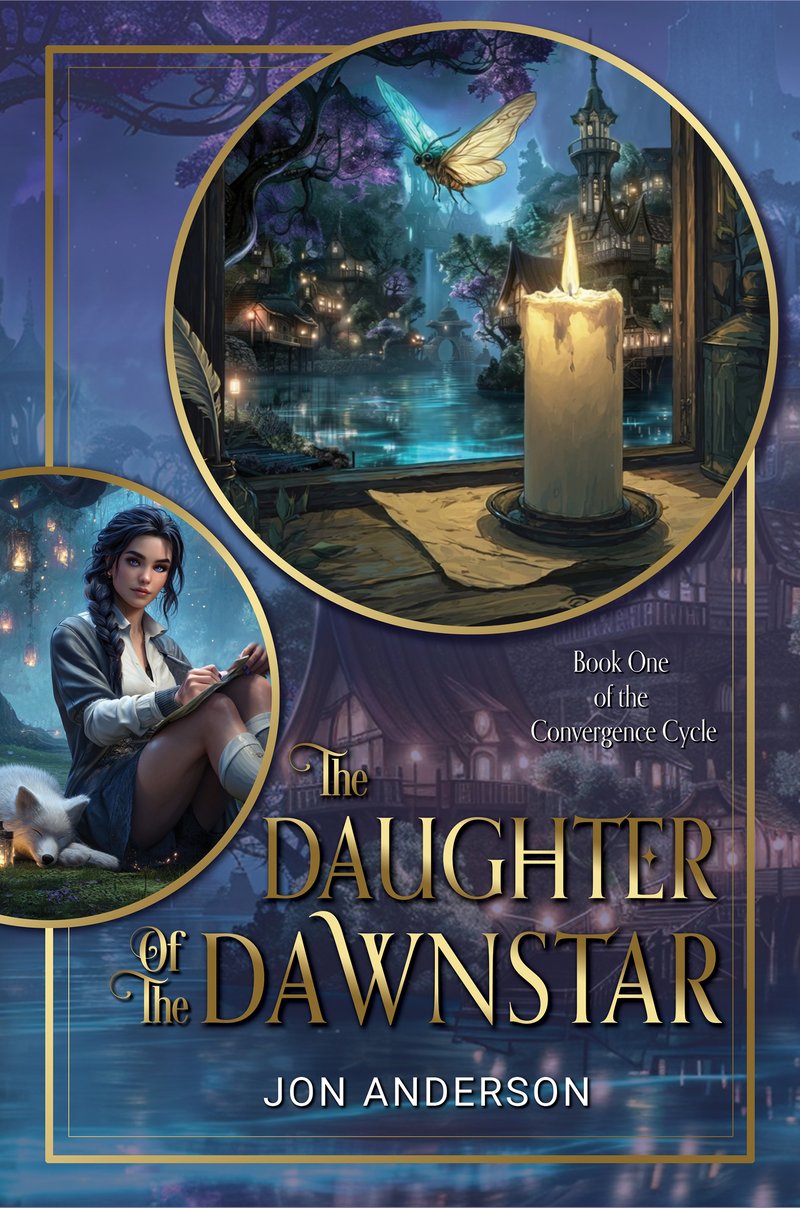
The Daughter of the Dawnstar is Book 1 of The Convergence Cycle, an epic fantasy series by Jon Anderson. It is a magic-school and dragon-rider fantasy with a slow-burn love triangle, set in a world built on the ruins of a lost, advanced empire, with steampunk and lost-civilization elements that grow across the series.
If you have been chasing the feeling of your first night at Hogwarts, or the white-knuckle tension of your first trip to Basgiath, The Daughter of the Dawnstar was written for you.
Book 1 of The Convergence Cycle is a magic-school fantasy full of wonder, rivalry, dragons, and secrets the school would rather keep buried. It is also the first step into a much larger world, one that grows stranger and more ambitious with every book.
This guide is for readers deciding whether to pick it up. It covers the stories that inspired it, what will feel familiar, and what makes it its own. There are no spoilers here, only vibes.
Jump to a section
The Daughter of the Dawnstar at a Glance
Subgenres: epic fantasy, magic-school fantasy, dragon-rider fantasy, romantasy, with steampunk and lost-civilization fantasy growing across the series
Age and content: crossover fantasy for teen and adult readers. Books 1 and 2 contain no explicit content.
Recommended for: fans of Harry Potter, Fourth Wing, Shannara, Jules Verne, and the legend of Atlantis; readers who love deep world-building, intricate magic systems, ensemble casts, and a mystery that unfolds across a whole series.
The World of The Convergence Cycle

The story begins in the Aetherion Dominion, a realm of mages, dragon riders, and ancient institutions. At its heart stands the Arcanum, a school where young mages are sorted into Orders, trained in magic, and tested against each other.
Kaia Hawthorne arrives there carrying a famous name. Her mother, the Dawnstar, was the most powerful mage in recorded history. Kaia never met her.
Behind the Dominion lies a far older story. Long ago, the Aeonic Empire ruled the world, so advanced that its wonders have faded into myth. Then came the Archon, the most brilliant man who ever lived. He seized the empire in a single day and built armies of iron that never tired and never feared. The war to stop him ended in the Cataclysm, and the world started over.
The Dominion believes it is the only thing that survived. It is wrong.
If You Love Harry Potter: A Magic School Full of Wonder and Secrets
What you'll recognize
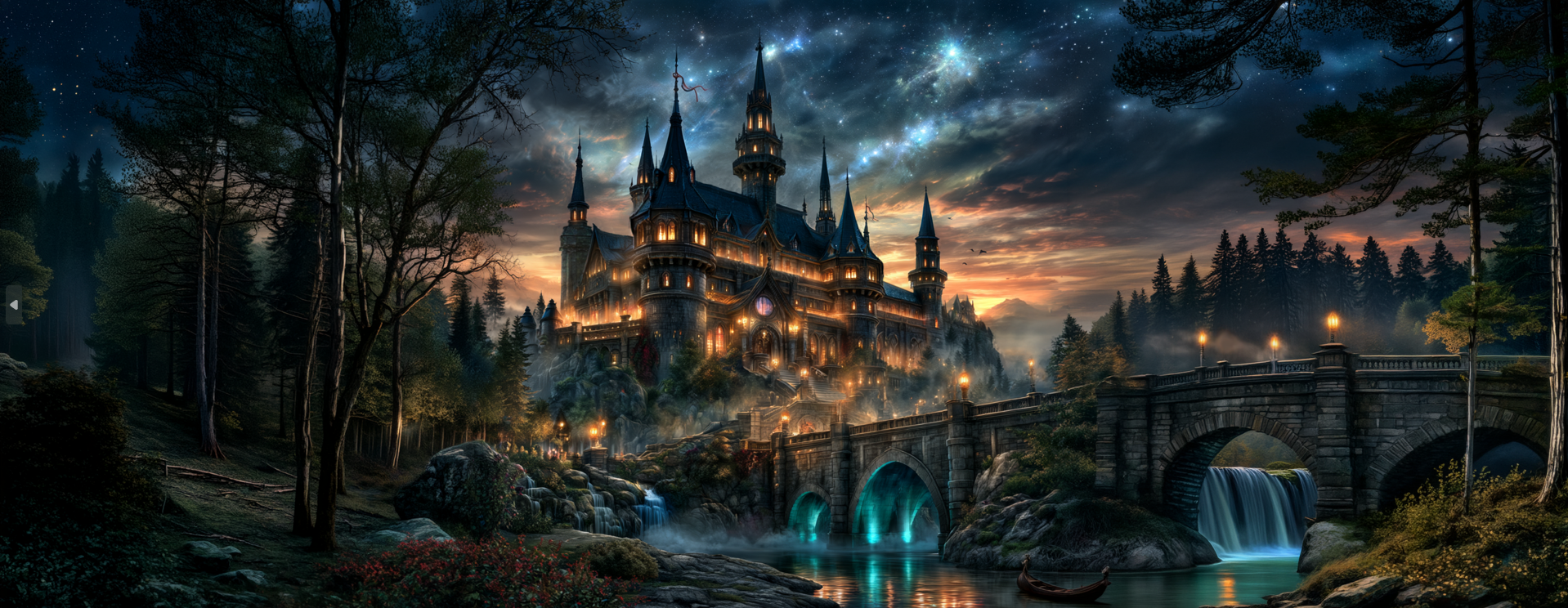
The Arcanum is whimsical, quirky, and quietly mysterious. Portraits watch you pass, corridors hold enchantments nobody remembers casting, and every student wonders which door leads somewhere they shouldn't be.
You'll find a sorting rite that decides where you belong, rival Orders that each reflect a different kind of person, and a cast that feels like home: the brilliant best friend, the loyal one who makes everyone laugh, the rival with a cutting smile, troublemaking twins, an eccentric headmaster, and professors you are never quite sure about. Above it all hangs the legend of a dark figure from the past whose name still makes people uneasy.
Draconis
Where the Brave & Courageous dwell.
Arcanis
Where those who seek Knowledge find their calling.
Genesis
Where the Kind & Creative find their home.
Tempest
Where the Ambitious and Powerful rise to Lead.
Shadowborn
Where Loyalty lives in Silence & Shadow.
What makes it different
The sorting is no single moment under a hat. The Rite of Reflection is an immersive experience that tests who you really are, and the results do not always match what students hope.
The school competition is bigger, too. The Order Games run the entire year, with five very different events testing puzzles, flight, alchemy, dueling, and the stage. The magic system is structured and learnable, built on gates, runes, and visualization, so you can follow how Kaia improves spell by spell.
And Kaia is not a blank slate. She carries her mother's legend everywhere she goes, and she has a rare gift of her own: she can step inside the past.
If You Love Fourth Wing: Dragon Riders, Deadly Trials, and High-Stakes Romance
What you'll recognize
In the Order of Draconis, first-years spend their whole year training to ride. At the end of it comes the Binding, where the dragons decide who is worthy. Nobody gets to choose their dragon. The dragon chooses them, or it doesn't.
Riders and dragons speak mind to mind. The dragons are proud, opinionated, and often very funny, and a bond with one changes a rider for life. The pressure is real, the rivalries are sharp, and a love triangle simmers under all of it.
What makes it different
Here, the riders are mages too. They learn spells alongside flight, so a dragon rider in this world is a weapon in two ways at once.
There are six dragon races, each created for this world, each with its own power and temperament. Volthar breathe lightning. Solaris burn with the light of the sun. Terravane tunnel through stone. And each race has its own job on the battlefield, from siege-breakers to night raiders to the shields who guard the wounded. The dragons fight like a real army, not a flock.
The romance is a slow burn, and Books 1 and 2 keep it free of explicit content.
Air support
Proud, fiercely loyal fire dragons that rain flame on enemy troops from above, and the most numerous in the sky.
Read moreAerial warfare
Storm dragons that breathe flame and lightning, fast and impatient, and masters of dragon-to-dragon combat.
Read moreSiege
Bronze earthfire dragons whose breath melts stone. First into the fight, they tunnel under walls and break fortresses.
Read moreRear guard and supply
White-and-gold sun dragons of Elyndor who shield the wounded and keep the supply lines alive.
Read moreStrategic destruction
Black shadow dragons whose fire devours light. Silent night raiders that hunt siege engines and supply lines.
Read moreBattlefield command
Frost dragons of legend, the generals of dragonkind, who direct every flight below them. Only one lives in the modern age.
Read moreWhere the Series Is Headed: Steampunk Fantasy, Lost Civilizations, and Magic Versus Machine
Book 1 lives almost entirely inside the Dominion, at the Arcanum. But the world does not end at the Dominion's borders, and the series does not stay there. As the books go on, the map opens up, and these are the stories that shaped what comes next.
If you love Atlantis, lost civilizations, and Shannara
For thousands of years, people have wondered whether the past was more advanced than we think. Plato wrote of Atlantis, a mighty island civilization lost beneath the sea. Göbekli Tepe, a ring of carved stone pillars in Turkey, was raised around 11,000 years ago, before farming, and it still challenges what historians thought ancient people could build. Beneath Cappadocia, whole cities were carved into the rock deep enough to hide thousands of people. Some scholars and dreamers go further, and ask whether earlier civilizations rose and fell long before the history we remember.
The Convergence Cycle is built on that question, and it answers yes. The Aeonic Empire was so far ahead of the present day that people now tell its story as myth. Its ruins and relics are still out there, and nobody alive fully understands them. The people who came after are living in the shadow of something greater than themselves, and most of them don't know it.
Fans of Terry Brooks will recognize the feeling. Shannara opens as classic fantasy, then reveals book by book that its world stands on the bones of something much older. The Convergence Cycle unfolds the same way, in its own world and on its own terms. Each book brings a little more of that lost age back into the light.
If you love Jules Verne and steampunk
More than 150 years ago, Jules Verne imagined machines his world had not built yet. In Journey to the Center of the Earth, explorers descend through a volcano and find a hidden sea, glowing caverns, and creatures that should have died out ages ago. In Twenty Thousand Leagues Under the Sea, Captain Nemo commands the Nautilus, a submarine of riveted iron and lamplit salons, built by a man who turned his back on the world above. In The Mysterious Island, castaways rebuild civilization from nothing using only science and stubborn ingenuity.
Verne's stories gave readers a particular kind of wonder: brass and steam, gauges and pressure valves, and the belief that a brilliant enough mind could reach anywhere, even the bottom of the sea or the heart of the earth. That vision became one of the main roots of steampunk. Generations of writers, artists, and filmmakers kept returning to his riveted hulls and impossible expeditions, until an entire aesthetic grew up around them.
For me, it started at Disney World. My father's favorite ride, and mine, was 20,000 Leagues Under the Sea. We'd climb down into that submarine together and peer out the portholes at a world hidden beneath the waves. That ride is where I fell in love with Jules Verne, with the mysteries waiting under the ocean, and with the wonder of invention, and I never grew out of it.
Machines you can see working. Places nobody has ever mapped. Inventors who refuse to accept the word impossible. When I started building this world, I knew that spirit had to be part of it.
In Book 1, it starts small, with Kaia herself, who has always been better with her hands than anyone expects. As the series grows, so does the scale: places deep beneath the world where the lamps never go out and the engines never stop.
If you love the Mines of Moria in The Lord of the Rings
In J.R.R. Tolkien's The Lord of the Rings, the Fellowship takes the road under the mountains through Moria, the ancient dwarven kingdom of Khazad-dûm. Once it was the greatest city the dwarves ever built: endless halls held up by forests of carved pillars, bridges over bottomless chasms, forges and mines that ran deeper than anyone could measure. It was a civilization built on craft, engineering, and the riches of the deep earth.
By the time the Fellowship arrives, it is silent. The dwarves dug too greedily and too deep, and what they woke drove them out. What is left is a whole lost world under the earth, so vast that walking through it makes you feel small, and every dark doorway makes you wonder what the people who built it knew.
The Convergence Cycle carries that feeling into its later books: monumental places carved by an older world, built with skill the present day has forgotten, and the uneasy sense that something down there is still running.
If you love Star Wars: Andor and Rogue One
For most of Star Wars, we see the shining side of the galaxy. Jedi and Sith clash with the Force, a power that works a lot like magic. The story moves through gleaming capitals, beautiful planets, and the elite who live there.
Andor and Rogue One turn the camera around. They follow ordinary people who have no Force at all: mechanics, scavengers, smugglers, and workers just trying to make it to tomorrow. They survive on ingenuity and scraps, patching together what they have and inventing what they don't. Seeing the underbelly beneath the shiny parts makes the whole galaxy feel deeper and more real, because you finally see the civilization that holds everything else up.
The Convergence Cycle grows into that same contrast. Not everyone in this world wields magic, and not every corner of it is spires and spellbooks. As the series widens, it reaches places that are grittier and harder: workshops, back alleys, and people who get by on grit and invention in the shadow of those with power.
And when magic and machine finally meet, neither side will ever see the world the same way again.
Reader FAQ
It is Book 1 of The Convergence Cycle, a planned ten-book epic fantasy series. Book 1 tells a complete school-year story with a satisfying arc, while opening mysteries that carry through the series.
Start with Book 1, The Daughter of the Dawnstar, and read the series in publication order. Each book builds on the world, characters, and mysteries of the one before it.
The series is about legacy, identity, friendship, and what happens when two ways of understanding the world collide. The tone balances wonder and humor with real danger, romance, and a mystery that deepens with each book.
Yes, in the ways that matter most: a magical school, a sorting rite, rival Orders, a close trio of friends, and a dark legend from the past. It adds dragon riders, a year-long school competition, a slow-burn love triangle, and a world that expands well beyond the school as the series continues.
Yes. It is crossover fantasy written for both teen and adult readers, and Books 1 and 2 contain no explicit content. It does include peril, combat, and emotional moments typical of epic fantasy.
Join the reader list at convergencecycle.com. Subscribers hear about sample chapters and the release date first, and they get lore from the world that has not been published anywhere else.
The Daughter of the Dawnstar is a strong pick. It has dragon riders, a Binding where the dragons choose their riders, telepathic bonds, and a slow-burn love triangle, with no explicit content in Books 1 and 2.
Yes. A slow-burn love triangle sits at the heart of Book 1, woven through the school year, the competition, and the mystery.
It grows into it. Book 1 focuses on magic, dragons, and the Arcanum, while steampunk, lost civilizations, and the clash of magic and machine expand across later books.
The Daughter of the Dawnstar is written by Jon Anderson, a U.S. Army veteran and lifelong fantasy reader. It is the first book in his epic fantasy series, The Convergence Cycle.
Join the Reader List
The Arcanum is opening its doors soon, and reader list members will be the first through them.
Sign up and you'll get:
- The release date before anyone else
- First word when sample chapters go live
- Unreleased lore from the world of The Convergence Cycle, sent straight to your inbox
and step into the world before the first page turns.